What is Oxidation Number
In their compounds the oxidation number of alkali metals Li Na K Rb Cs is always 1. The term covers a large and diverse body of processes.

Pin By Annie La On Chem Chemistry Education Teaching Chemistry Chemical Science
Similarly gaining electrons decreases the oxidation number since electrons are negative and thus add a negative charge.

. A simple way to remember a monatomic ions oxidation number is to recall the number of electrons it gains or loses which is based on its group number. Similarly two electrons are produced when the oxidation number of zinc increases from 0 to 2 in the second half reaction. The sum of oxidation numbers in a neutral compound is 0.
The oxidation state of carbon increases from 2 to 4 while the oxidation state of the hydrogen decreases from 1 to 0. That is an oxidation number of zero indicates a neutral atom. When fats in foods become rancid oxidation is responsible.
While fully ionic bonds are not found in nature many bonds exhibit strong. The oxidation number of any atom in its elemental form is 0. Usually the change in oxidation number is associated with a gain or loss of electrons but there are some redox reactions eg covalent bonding that do not involve electron transfer.
Many oxidation-reduction reactions are as common and familiar as fire the rusting and dissolution of metals the browning of fruit and respiration and. Because sodium phosphite is neutral species the sum of the oxidation numbers must be zero. The oxidation number of a free element is always 0.
A large amount of energy is released and restored as ATP during the oxidation of fatty acids. Oxidation involves an increase in oxidation number while reduction involves a decrease in oxidation number. An atoms oxidation number also sometimes called the oxidation state is a measure of how many electrons it has gained or lost.
In the oxidation number change method the underlying principle is that the gain in the oxidation number number of electrons in one reactant must be equal to the loss in the oxidation number of the other reactant. It is a number which is generally. An oxidation number is a positive or negative number assigned to an atom according to a set of rules.
The ATP is formed from both. Oxidation a chemical process that produces undesirable changes in color flavor and nutrient content results when air reacts with food components. Hydrogen and oxygen have oxidation numbers of 1 and -2.
Different ways of displaying oxidation numbers of ethanol and acetic acid. The ion has a charge of -1 so. Bonds between atoms of the same element homonuclear bonds are always divided equally.
In chemistry the oxidation state or oxidation number is the hypothetical charge of an atom if all of its bonds to different atoms were fully ionicIt describes the degree of oxidation loss of electrons of an atom in a chemical compoundConceptually the oxidation state may be positive negative or zero. As discussed in the Quick Tutorial this option is especially helpful for doing random assignment by blocks. Chlorine bromine and iodine usually have an oxidation number of 1 unless theyre in combination with oxygen or.
When half reactions for hypothetical isolated oxidations and reductions are combined the electrons must cancel if the equation for a possible overall chemical reaction is to result. What is Meant by the Oxidation Number. By using this service you agree to abide by the SPN User Policy.
What changes in this reaction is the oxidation state of these atoms. Energy Production Fatty Acid Oxidation. The oxidation number of fluorine is always 1.
The oxidation number of N 3-is -3. Redox reactions can be balanced by the use of oxidation numbers. It was reported recently that the interface between the amorphous and crystalline phases plays a significant role in the electrocatalytic activity of transition metal compounds.
Oxidation-reduction reaction also called redox reaction any chemical reaction in which the oxidation number of a participating chemical species changes. The usual oxidation number of hydrogen is 1. So this is a loss of ATP and must be subtracted later.
Following are the list of rules that determine how. The oxidation numbers of ceNa and ceO are 1 and -2. This layout allows you to know that 23 is the third number in the sequence and 18 is the ninth number over both sets.
Practice exercises Balanced equation. Oxidation occurs when the oxidation number of an atom becomes larger. Oxidation and reduction are therefore best defined as follows.
The oxidation number of a monatomic ion equals the charge of the ion. The development of cost-effective and high-performance electrocatalysts for water oxidation has attracted intense research interest. An atoms oxidation number in its most basic form is always zero.
Discoloration of light-colored fruits can be reduced by using an antioxidant such as ascorbic acid or citric acid before freezing. The oxidation number is the hypothetical charge of an atom in a molecule or ion and it is a measure of its apparent capacity to gain or lose electrons within that species. The oxidation number of each atom can be calculated by subtracting the sum of lone pairs and electrons it gains from bonds from the number of valence electrons.
Valency is different from the oxidation number and it has NO SIGN. Now click the button Calculate Oxidation Number to get the result Step 3Finally the oxidation number of the given chemical compound will be displayed in the new window. In Chemistry the oxidation number helps to keep track of the electrons in an atom.
Except in metal hydrides the oxidation number of H in its compound is always 1. Depending on the. Letting x be the oxidation number of phosphorus 0 31 x 3-2.
In their compounds the oxidation number of alkaline earth metals Be Mg Ca Sr Ba is always 2. Xoxidation number of P 3. The atoms in He and N 2 for example have oxidation numbers of 0.
R is an abbreviation for any group in. Acidic medium Basic medium. Oxidation and Reduction.
In the fatty acid spiral there is only one reaction which directly uses ATP and that is in the initiating step. Enter an equation of a chemical reaction and click Submit for example. The sum of the oxidation numbers in a monatomic ion is equal to the overall charge of that ion.
The use of half reactions is a natural outgrowth of the application of the electron. For example the oxidation number of Na is 1. Thus the valency of nitrogen is 3 whereas it can have oxidation numbers from -3 to 5.
Oxidation Number Periodic Table Elements Periodic Table Oxidation Oxidation State
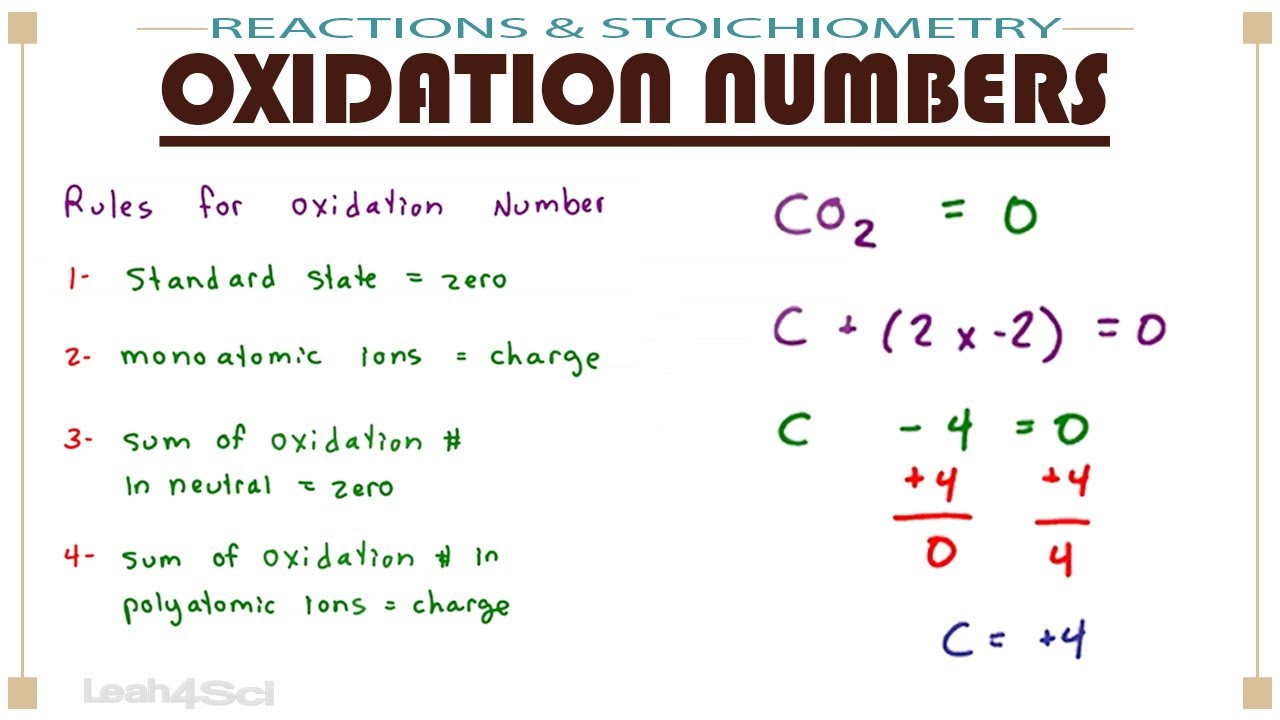
New Video How To Calculate Oxidation Numbers In Mcat General Chemistry Chemistry Lessons Chemistry Chemistry Worksheets
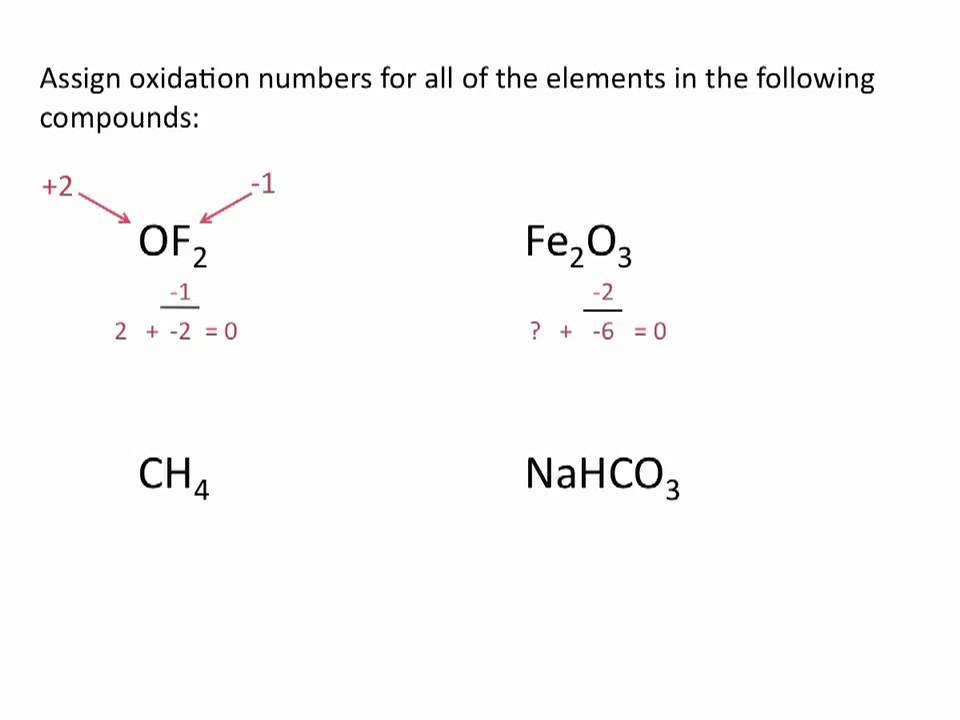
Assigning Oxidation Numbers Chemistry Tutorial Oxidation Chemistry Redox Reactions

Oxidation Numbers Sulphur Exhibits Oxidation Numbers Of 2 0 2 4 And 6 Chemistry High School Chemistry Chemistry 101
No comments for "What is Oxidation Number"
Post a Comment